
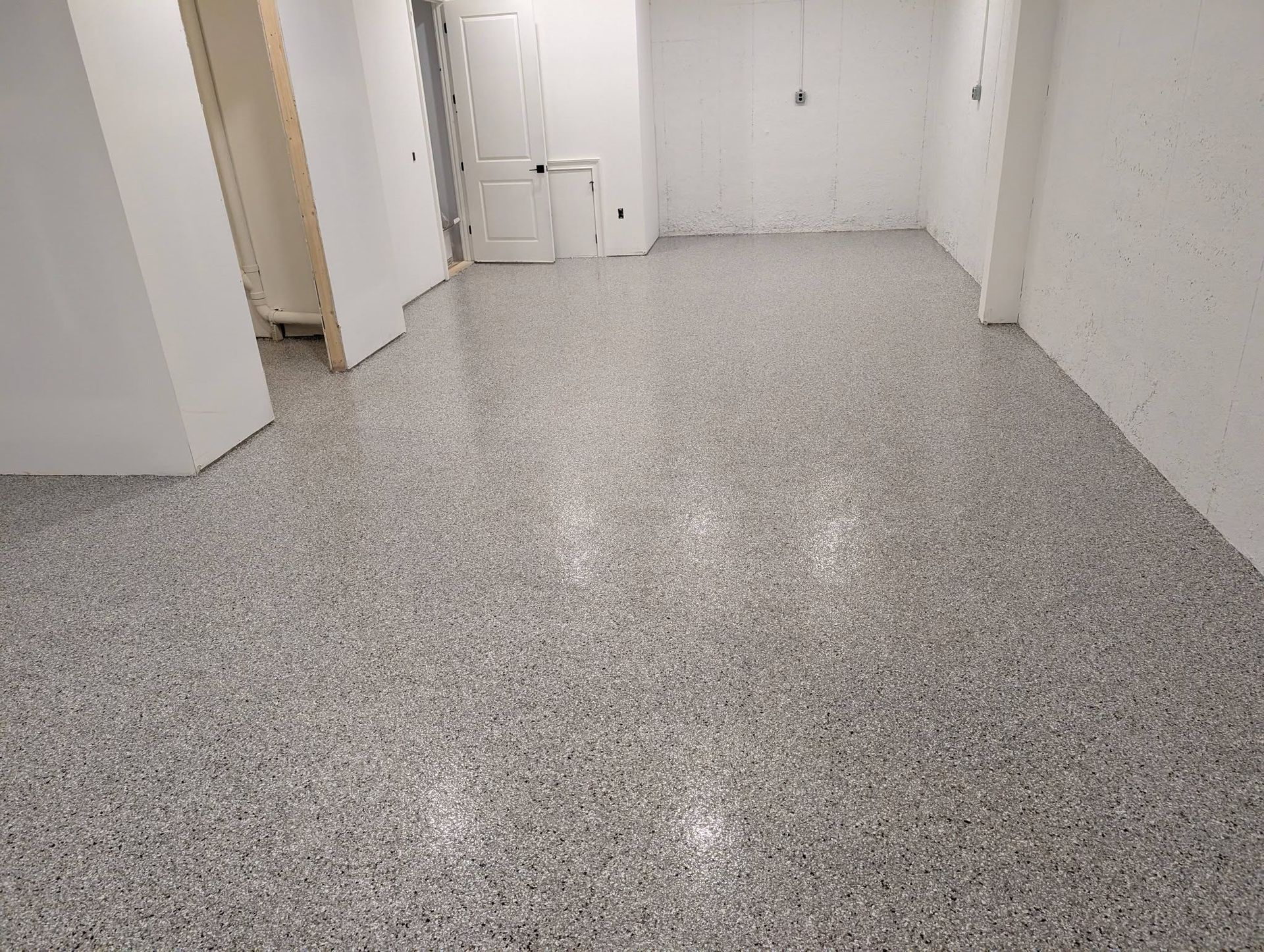
Floors Built for Heavy Equipment and Traffic
Commercial Epoxy Flooring in Augusta for warehouses and retail spaces requiring seamless, low-maintenance surfaces
Warehouses, showrooms, retail spaces, and churches generate foot traffic and equipment loads that crack, stain, and wear through bare concrete or thin coatings within months. By His Grace Epoxy Flooring LLC installs commercial epoxy systems throughout Augusta that handle forklifts, pallet jacks, rolling carts, and constant foot traffic without delaminating or showing surface damage. Proper preparation removes contamination and creates the substrate profile necessary for coatings to bond mechanically rather than relying on surface adhesion that fails under stress.
The system creates a seamless finish without joints or seams where spills collect and bacteria grow, which improves cleanability in retail and food service environments where sanitation standards matter. Customizable flake systems, color blends, and functional coatings allow you to match brand colors, designate traffic zones, or add slip resistance in areas prone to wet conditions.
Arrange an on-site consultation to review your facility's traffic patterns and identify the coating specifications needed for your operational demands.
How the System Handles Daily Operations
Installation involves shot-blasting or diamond grinding to remove surface laitance, oils, and existing coatings that prevent epoxy from anchoring into the concrete pores. High-quality materials cure into a rigid layer that distributes point loads from equipment wheels and resists abrasion from dragged pallets or rolling carts, which means the floor doesn't pit or groove under repeated use.
Once cured, the coating resists staining from hydraulic fluid, cleaning chemicals, and food spills that soak into bare concrete and create permanent discoloration. You'll notice spills sit on the surface rather than penetrating the slab, which reduces cleaning time and eliminates odors from absorbed liquids. The glossy finish also improves light reflectivity, which can reduce lighting costs in large facilities with limited natural light.
Broadcast flake systems provide slip resistance in entryways or areas exposed to moisture, while smooth epoxy topcoats work better in warehouses where cart wheels and foot traffic benefit from a frictionless surface. The system doesn't include waxing or periodic refinishing, so your maintenance routine involves sweeping and mopping rather than stripping and recoating.
Answers to Frequent Service Questions
Business owners evaluating flooring options typically want to understand how the installation affects operations and what performance they can expect under real-world conditions.
What's involved in surface preparation for commercial spaces?
The concrete is mechanically abraded using shot-blasting or grinding equipment to remove contaminants, open the pore structure, and create the rough profile that allows epoxy to bond. Cracks and control joints are filled or left flexible depending on slab movement, and the surface is vacuumed to remove dust before coating application.
How does the coating hold up under forklift traffic?
Epoxy cures into a hard, impact-resistant layer that distributes point loads from forklift wheels and resists surface abrasion from turning and braking. However, coatings applied over poorly prepared concrete or thin systems without adequate mil thickness can still delaminate under extreme loads, which is why surface prep and material quality determine long-term performance.
Why do some facilities in Augusta choose flake systems over solid colors?
Flake systems hide minor surface imperfections and provide slip resistance through added texture, which matters in retail entryways or areas where moisture tracking is common. The color variety also allows businesses to match brand standards or create visual interest in customer-facing spaces.
When should I avoid scheduling installation?
If your facility operates continuously without downtime, you'll need to phase the installation across sections or schedule during off-hours when the space can be vacated for 24 to 48 hours while coatings cure. Temperature and humidity conditions also affect curing, so installations are typically avoided during extreme heat or when overnight condensation risk is high.
What makes this different from polished concrete?
Epoxy adds a protective layer over the concrete, whereas polished concrete relies on densifiers and mechanical grinding to harden and seal the surface. Epoxy provides more customization through color and flake options, while polished concrete exposes the aggregate and works better in spaces where you want the raw concrete aesthetic without a coating.
By His Grace Epoxy Flooring LLC works with facility managers to schedule installations that minimize operational disruption and deliver the durability your environment requires. Contact us to discuss your facility's specific needs and timeline constraints.