
Heavy-Duty Coatings for Industrial Demands
Quartz Epoxy Systems in Augusta for commercial and industrial facilities requiring chemical-resistant durability
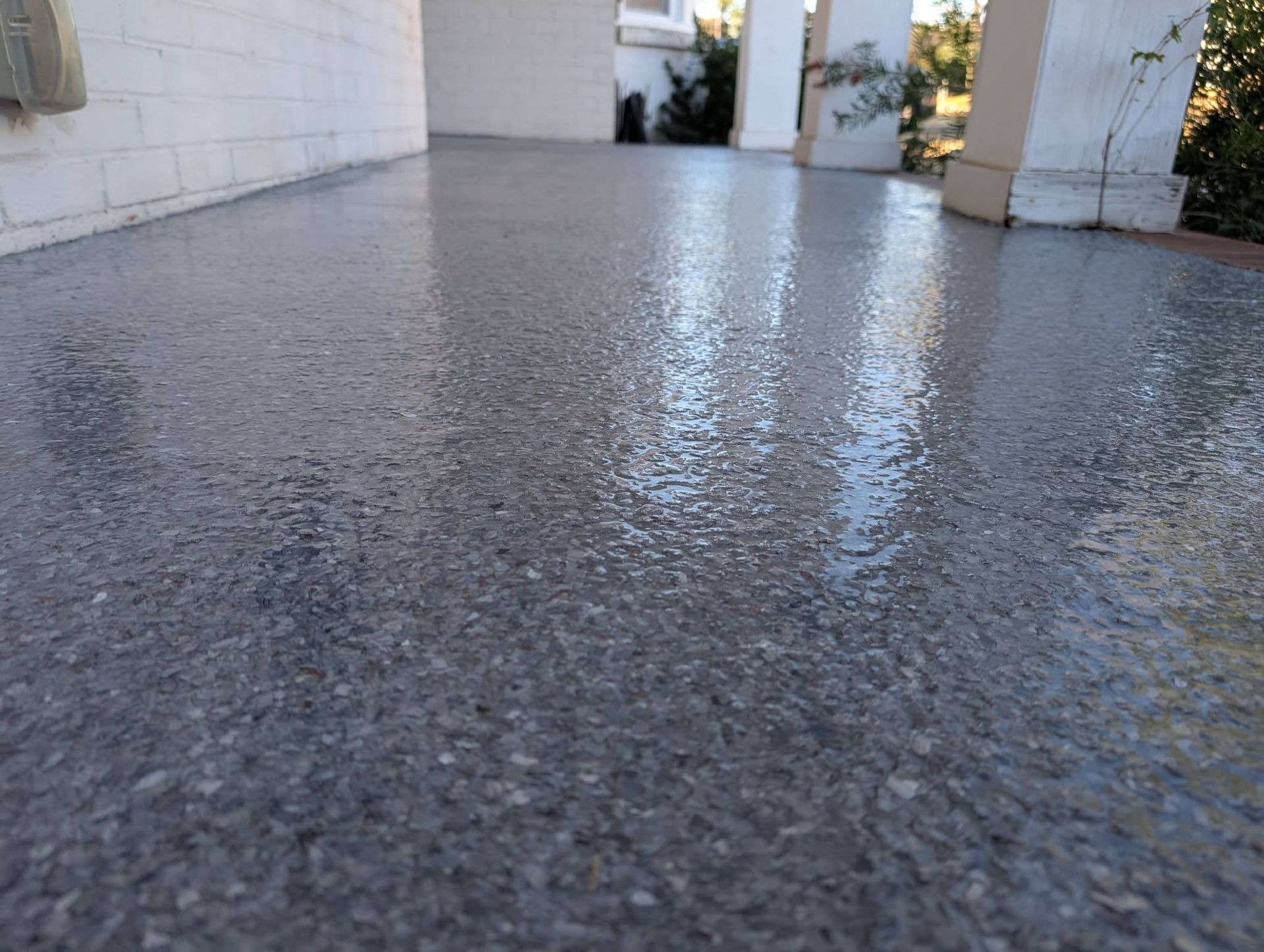
Facilities that handle chemicals, moisture, and heavy equipment need flooring that resists abrasion and provides slip resistance without cracking or delaminating under stress. Quartz epoxy systems broadcast silica quartz into epoxy resin to create a textured, impact-resistant surface that handles forklift traffic, chemical spills, and constant foot traffic in manufacturing plants, food processing areas, and high-moisture environments. By His Grace Epoxy Flooring LLC installs quartz systems throughout Augusta for businesses that prioritize performance and reliability over decorative finishes, delivering a clean, professional appearance that holds up under conditions that degrade standard coatings within months.
The broadcast quartz adds structural strength to the coating and creates a slip-resistant texture that improves safety in areas prone to wet conditions or spilled liquids. The system resists damage from thermal shock, chemical exposure, and mechanical wear, which means you're not repairing or recoating floors every few years to maintain functionality.
Schedule a facility evaluation to assess your current flooring condition and determine whether a quartz system meets your operational and safety requirements.
The Difference Between Performance and Decoration
Installation involves preparing the concrete substrate through grinding or shot-blasting, applying a primer coat, broadcasting colored quartz aggregate to full coverage, and sealing the system with a clear urethane or epoxy topcoat. The quartz layer adds mil thickness and impact resistance that prevents the coating from chipping or gouging under point loads from equipment wheels or dropped tools.
You'll notice the floor provides better traction than smooth epoxy, especially when wet, which reduces slip hazards in commercial kitchens, production areas, and entryways where moisture tracking is common. The non-porous surface prevents bacteria growth and makes sanitation easier in food service and healthcare environments where cleanliness standards are enforced through regular inspections.
Quartz systems don't require waxing or periodic stripping, so your maintenance routine involves sweeping and mopping with standard cleaning solutions rather than specialty floor care products. The coating resists degradation from acids, alkalis, solvents, and hydraulic fluids commonly found in industrial settings, which extends the life of the flooring system and reduces long-term replacement costs.
Questions Before Starting Your Project
Facility managers evaluating quartz epoxy systems want to understand how the installation process affects operations and what performance advantages justify the investment over standard epoxy or other flooring options.
What makes quartz systems more durable than standard epoxy coatings?
The broadcast quartz adds structural reinforcement and increases the overall mil thickness of the coating system, which distributes impact loads and resists abrasion better than epoxy alone. This makes quartz systems suitable for environments where forklifts, pallet jacks, and heavy foot traffic would wear through thinner coatings.
How does the slip resistance compare to flake epoxy systems?
Both systems provide texture, but quartz aggregate creates a more uniform, grippy surface that performs consistently when wet, whereas flake systems offer variable texture depending on flake size and broadcast density. Quartz is preferred in industrial settings where slip resistance is a safety requirement, not just a design preference.
Why do food processing and healthcare facilities choose quartz over tile or vinyl?
The seamless surface eliminates grout lines and seams where bacteria, moisture, and contaminants collect, which simplifies sanitation and helps facilities meet health department standards. Tile grout deteriorates and harbors bacteria, while vinyl seams can lift and trap debris, making quartz a more hygienic long-term solution.
When should I schedule installation to minimize downtime?
Quartz systems require 24 to 48 hours of curing time before the floor can handle foot traffic, with full cure taking several days depending on temperature and humidity. If your facility operates continuously, the installation can be phased across sections or scheduled during planned shutdowns to avoid disrupting production or service operations.
How does Augusta's industrial environment affect the coating system?
Facilities near the Savannah River or in areas with high humidity may need additional moisture mitigation during surface prep if the concrete slab shows signs of vapor transmission. Quartz systems handle moisture better than standard epoxy once cured, but the substrate must be dry during installation to ensure proper adhesion.
By His Grace Epoxy Flooring LLC evaluates your facility's specific demands and installs quartz systems designed to deliver the durability, safety, and cleanliness your operations require. Contact us to review your flooring challenges and discuss the system specifications that match your environment.